
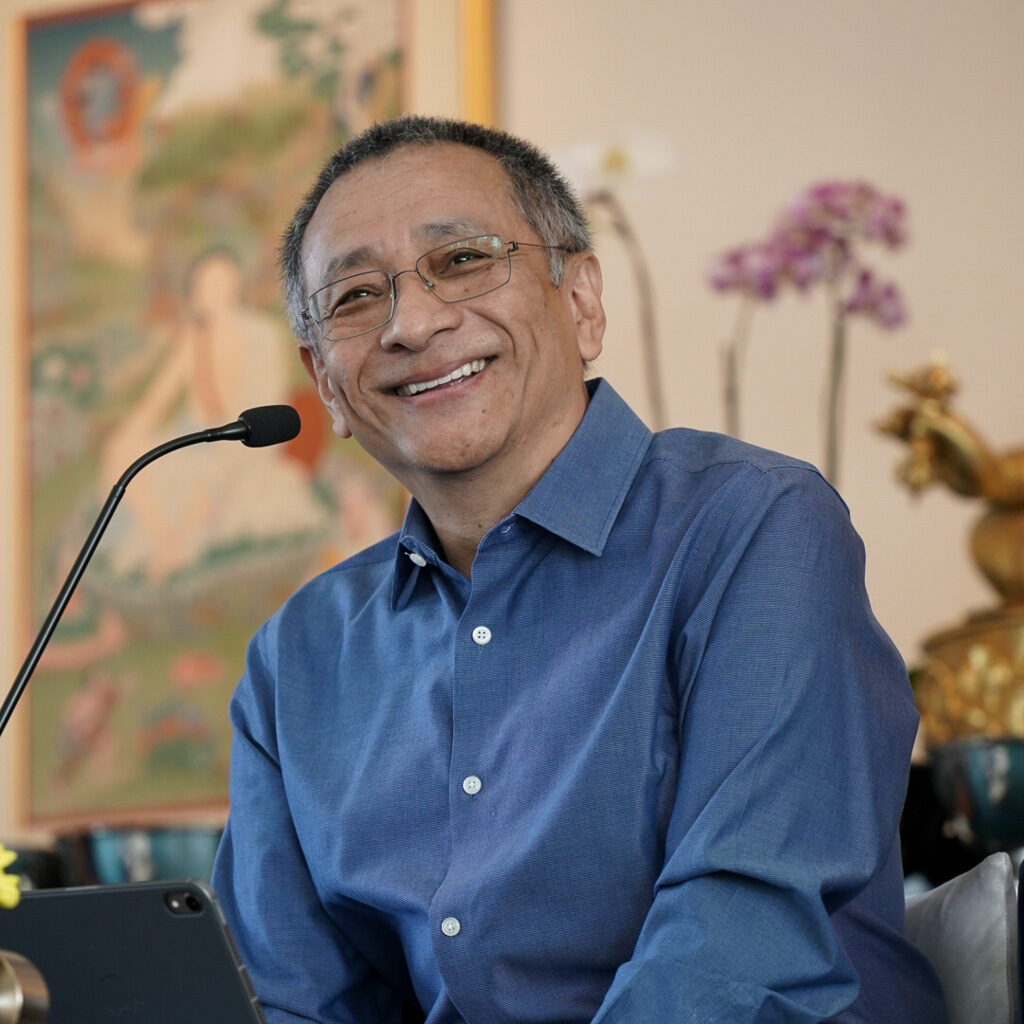
Mindfulness for Lazy Meditators
a special series with Dzogchen Ponlop Rinpoche, Acharya Tashi, and Mitra Tyler
Sundays April 26, May 3, May 10, 2026
To be honest with ourselves, we’re not really here to meditate, are we? We want to feel better… without putting in too much effort.
— Dzogchen Ponlop Rinpoche, April 5, 2026
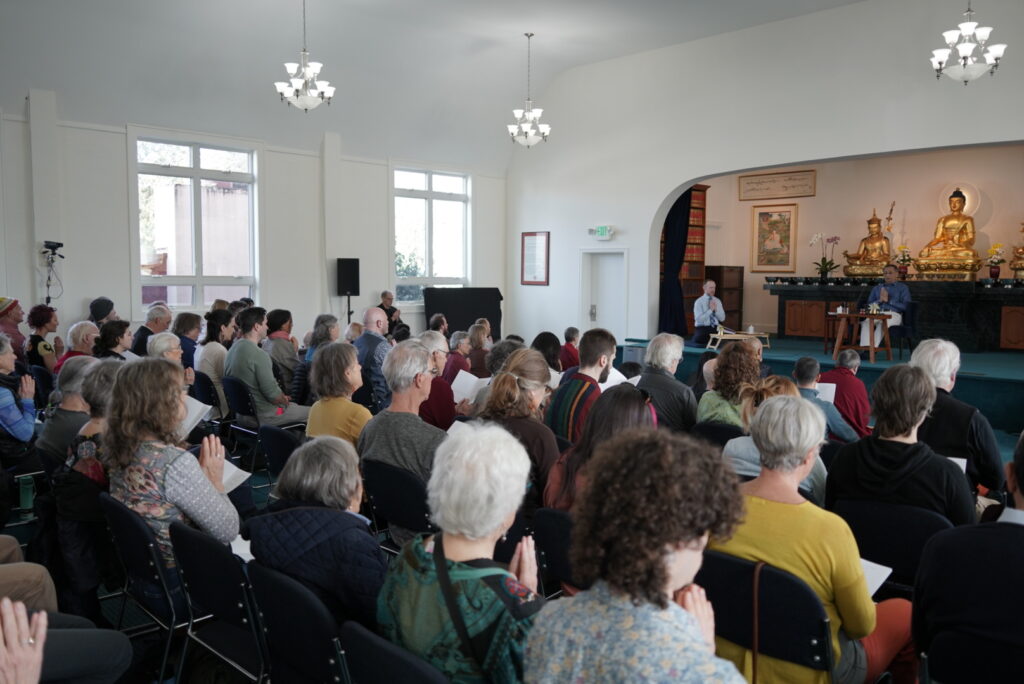
That’s how Dzogchen Ponlop Rinpoche opened the first teaching in our Mindfulness for Lazy Meditators series — and the room laughed because it was true.
We come to the cushion with a “hidden agenda” — to find peace, less anxiety (and maybe a little enlightenment on the side). Turns out, that’s not a problem. It’s actually the perfect place to start. He told us to meet our mind exactly as it is, not an edited version. What followed was just as direct: three instructions for working with your own mind.
Sit. Breathe. Notice.
We’ve completed the first cycle of teachings in this series hosted by Nalandabodhi Seattle, with Acharya Tashi Wangchuk and Mitra Tyler Dewar following Rinpoche’s clear instructions with additional pragmatic, grounded, and kind practices.
This coming Sunday 4/26, Rinpoche returns for the second time — be sure to register and come early, as we expect another full house! Lazy meditators welcome.
Alex S. has been studying Buddhism through Nalandabodhi since January 2024 having first been introduced to meditation in high school. An ex-tech worker, he opened a cafe in Seattle with his wife and close friend in 2022. In his free time he enjoys reading, dance, and finding unexpected connections between culture, cosmology, and contemplation.


