
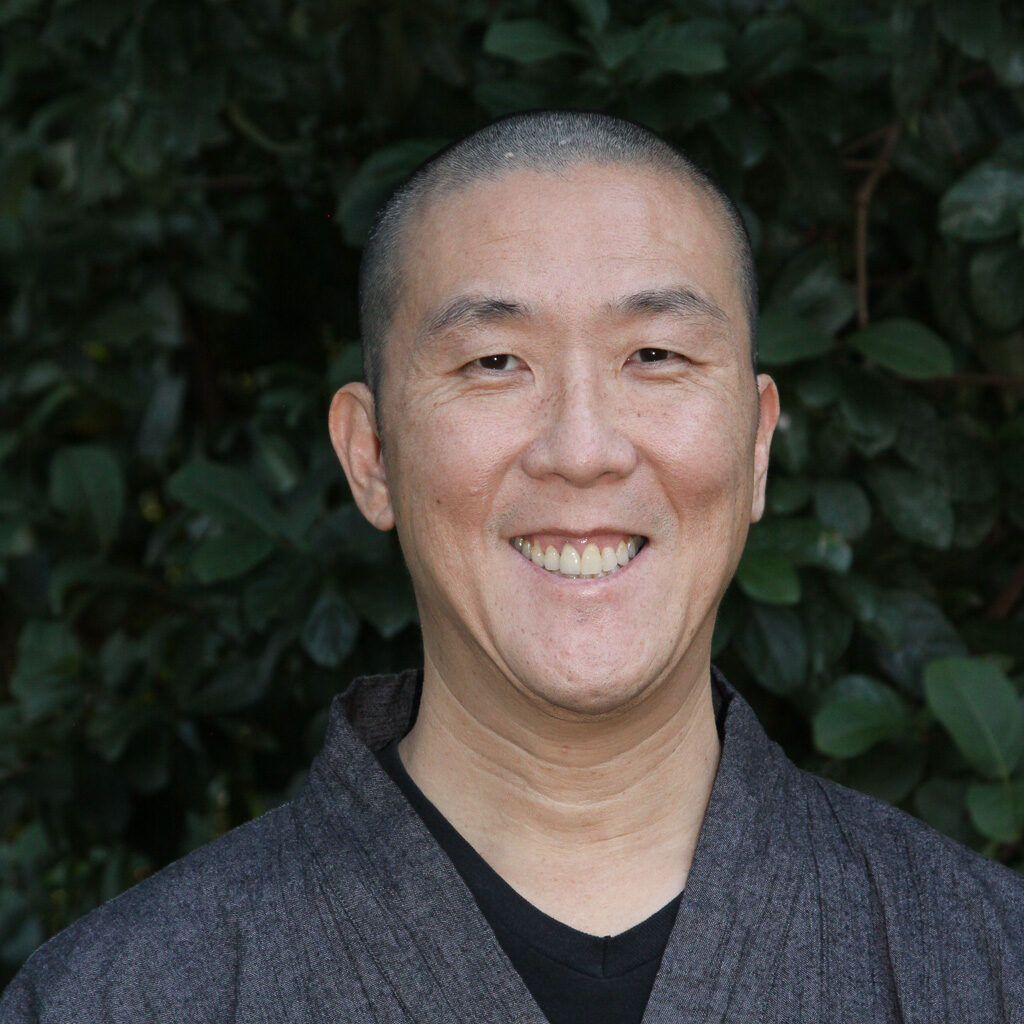
Nalandabodhi Seattle is delighted to be hosting guest teacher, Guo Gu, for a special Sunday including a public dharma talk on Chan: The Practice of Wonderment and a related half-day retreat based on the practice of silent illumination (默照 mòzhào).
If you are interested in joining this half-day practice program, please join us for Guo Gu’s public dharma talk (“Chan: The Practice of Wonderment”) earlier on Sunday.
What is Chan?
Chan is freedom, expressed through wisdom and compassion.
Chan is also a school within East Asian Buddhism, with a history dating back to 7th century CE in China. Later this form of Buddhism was transmitted to Japan as “Zen” in the 13th century.
Silent Illumination & Wonderment
Silent Illumination
For Guo Gu, the two components of the term point to the nature of mind itself. “Silence” refers to the fact that we are originally free from all narratives and constructs of self — our true nature is intrinsically empty and undisturbed, even in the midst of vexations. “Illumination” refers to the natural, dynamic functioning of the mind in its openness, which in Chan is called wisdom or prajñā. Silent Illumination is therefore a metaphor for the inseparability of the mind’s empty nature and its function.
Technically, Silent Illumination is not a method of practice so much as the state of awakening itself — our true nature. Practice is still necessary, but only to remove the obscurations that conceal it. The correct view underlying the practice is that we already lack nothing and are originally free.
Wonderment
Guo Gu’s treatment of wonderment centers on the Chan practice of huatou — the “critical phrase” method of meditation. The genius of the premodern Chan masters was in their realization that the existential wonderment underlying deep questions (such as “Does a dog have buddhanature?”) could be leveraged as a method of practice. Chan masters realized that this energy of questioning — or wonderment — was more valuable than constructed explanations or answers. When this wonderment culminates and bursts, one is freed and liberated.
Wonderment (yiqing) is nonconceptual yet potent and all-consuming. It is cultivated by bringing forth a sense of not-knowing with regard to the critical phrase, without relying on intellectual understanding, personal experience, reason, or Buddhist teaching. When there is great and all-consuming wonderment, there is great awakening; small wonderment, small awakening; no wonderment, no awakening.
In short, for Guo Gu, Silent Illumination and wonderment represent two complementary paths in Chan — one rooted in stillness and luminosity, the other in penetrating, existential questioning — both pointing toward the same awakening.
Schedule
2:00–6:00p with alternating periods of sitting (~30min) and walking/movement/stretching (~15min)
Registration
Nalandabodhi Seattle offers dharma teachings at no cost, but please consider making a donation if you are able.
Format
Hybrid — onsite at Nalanda West and online via zoom.
Registration Details
A confirmation will be emailed after registering. Please register below and look for an auto-email response.
Please practice generosity when registering so that Nalandabodhi Seattle can continue to offer precious teachings like these to all who are interested in the dharma.
Questions?
Please contact seattle@nalandabodhi.org if you would like to volunteer to support this event or have any questions.
Teacher Bio
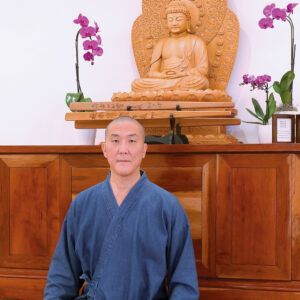 Guo Gu (Dr. Jimmy Yu) is the founder of the Tallahassee Chan Center, the founder of the socially engaged intra-denominational Buddhist organization, Dharma Relief, and a professor of Buddhism and East Asian religions at Florida State University. He studied under the late Master Sheng Yen for over 30 years, nine of which as his attendant monk and most senior and closest disciple. He is the author of The Essence of Chan (2012), Passing Through the Gateless Barrier (2016), and Silent Illumination (2021).
To view Guo Gu’s personal website, please visit: guogulaoshi.com.
Date/Time
Date(s) - Sun., June 28, 2026
2:00 pm - 6:00 pm
Location HYBRID Nalandabodhi Seattle @ Nalanda West

Registration
Registration is closed for this event.

