Thursdays, Oct. 13 – Nov. 17
7-8:30 p.m. (Pacific) Online via Zoom
Register
This informal weekly discussion group will include meditation, optional chanting and singing, and open conversation around refuge, what it means to be a Buddhist, and any other topics that come up.
These gatherings will be recorded for those who can’t attend on Thursday evenings.
What does it mean to “take refuge” in the Three Jewels: the Buddha, Dharma, and Sangha? What are we taking refuge from? Are we ready to choose to be a refugee? If we already have taken refuge, how can we continue to cultivate the inspiration that originally brought us to the path?
Investigate these questions and more as we read and discuss Dzogchen Ponlop Rinpoche’s short and profound teachings on outer and inner refuge, Entering the Path.
This book is available from the Nalanda Store and also from Amazon.
This discussion group is free. If you would like to make an offering, there is a suggested donation of $10 per class (see Registration page.)
If you have any questions, please contact nbcd@nalandabodhi.org.
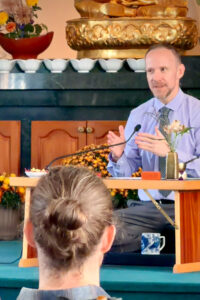
 This discussion group is facilitated by Nick Vail, a longtime student of Dzogchen Ponlop Rinpoche and a karunika (teacher) in the Nalandabodhi sangha.